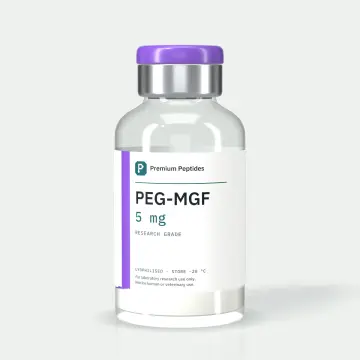
PEG-MGF
- 5mg
from £32.00In stock
Batch GT-A002 · 97.0% HPLCFor laboratory research use only. Not for human or veterinary use. Not a medicine, food supplement or cosmetic.
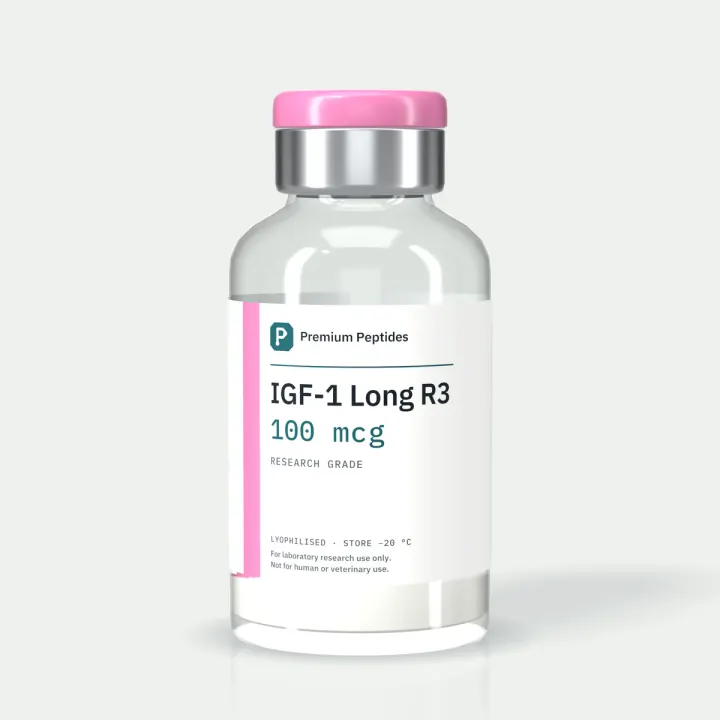
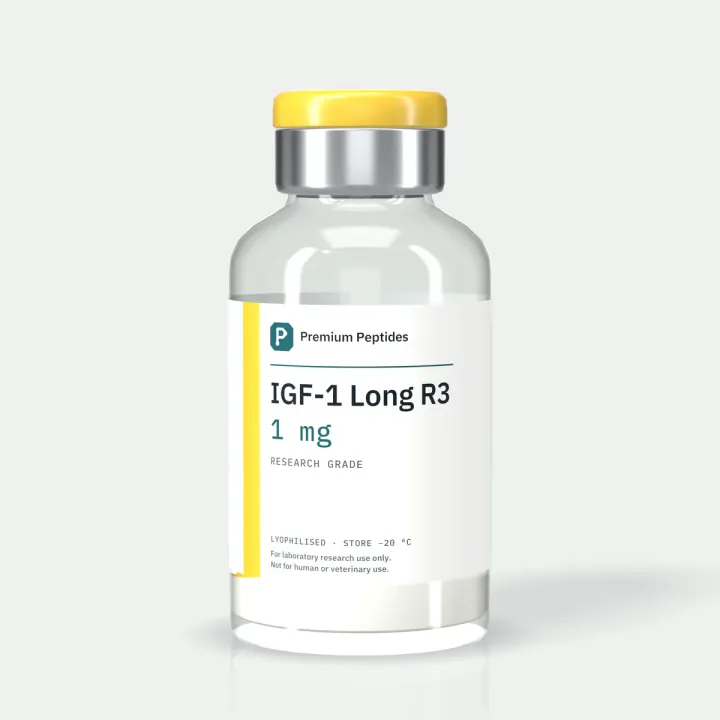
Also known as IGF-1 LR3 · LR3 IGF-1
Research use only. Not for human or veterinary use. Not a medicine, food supplement or cosmetic.
WADA notice. This compound is on the World Anti-Doping Agency Prohibited List. It is supplied for laboratory research and must not be used in sport.
| SKU | Batch | Result | Date | Report |
|---|---|---|---|---|
| IGF1_LR3-100mcg | P200225 | 98.06% purity (HPLC) | 25 Feb 2020 (lot date) Manufacturer's QC laboratory | |
| IGF1_LR3-1mg | P200225 | 98.06% purity (HPLC) | 25 Feb 2020 (lot date) Manufacturer's QC laboratory |
Manufacturer batch report: HPLC purity (and mass spectrometry where stated), as supplied with the lot.
IGF-1 LR3 (Long R3 Insulin-Like Growth Factor-1) is a synthetic analogue of human IGF-1, engineered for enhanced stability and biological activity in research settings. The modification involves replacing the glutamic acid at position 3 with arginine (“R3”), and extending the N-terminal region by 13 additional amino acids (MFPAMPLLSLFVN), resulting in a longer peptide chain of 83 amino acids compared to the native 70 in human IGF-1.
These structural modifications significantly reduce IGF-1’s binding affinity to IGF-binding proteins (IGFBPs), increasing the availability of the active peptide during in-vitro experimentation. As a result, IGF-1 LR3 is a valuable research tool in studies of cell growth, metabolism, and tissue differentiation. Supplied as a lyophilised powder, it is designed solely for laboratory research.
IGF-1 LR3 is widely used to study cell proliferation and survival mechanisms, particularly in muscle, neural, and epithelial cell lines. By activating the IGF-1 receptor (IGF-1R) and downstream pathways such as PI3K/Akt and MAPK, researchers can explore how growth factors regulate anabolic and regenerative cellular responses.
Because of its interaction with insulin-like signalling cascades, IGF-1 LR3 is a useful model for investigating glucose metabolism, amino acid uptake, and protein synthesis. Studies often focus on its ability to modulate mTOR pathway activity, which governs nutrient-sensitive protein translation and cellular energy homeostasis.
Research utilising IGF-1 LR3 often examines myoblast differentiation, hypertrophy, and recovery processes. Its prolonged half-life compared with native IGF-1 allows for extended receptor activation, making it ideal for in-vitro investigations into muscle development, regeneration, and repair signalling.
IGF-1 signalling has been linked to neurotrophic and neuroprotective processes, and IGF-1 LR3 provides a consistent model for exploring these effects. Laboratory studies investigate how the analogue may modulate neuronal growth, survival, and synaptic plasticity under various stress or oxidative conditions.
In vitro, IGF-1 LR3 is used to explore tissue repair pathways, including fibroblast proliferation and collagen synthesis. Researchers use it as a reference compound when investigating regenerative signalling cascades and cellular responses in wound-healing or tissue-engineering system.
IGF-1 LR3 represents a well-characterised, research-grade analogue of human IGF-1, providing an extended-acting model for the study of growth-factor-mediated signalling. Its unique structure and receptor kinetics make it a cornerstone peptide for laboratory exploration into cellular regeneration, metabolism, and growth dynamics. This compound is not intended for human or veterinary use, and should only be handled by qualified research personnel in controlled environments.
Synonyms: IGF-1 Long R3; IGF1 LR3; LR3-IGF-1; Long Arginine 3-IGF-1
Modified Single-Letter Sequence: MFPAMPLLSLFVN–IGF-1 core sequence (83 amino acids total)
IUPAC Condensed Amino Acid Sequence: MFPAMPLLSLFVN–GPRTLCGAELVDALQFVCGDRGFYFNKPTGYGSSSRRAPQTGIVDECCFRSCDLRRLEMYCAPLKPAKSA
Molecular Weight: 9117.6 g/mol
CAS Number: 143045-27-6
PubChem CID: 16130518
Further Reference: PubChem Link
Stability: Store lyophilised peptide at –20 °C. After reconstitution, aliquot to prevent repeated freeze–thaw cycles. Reconstituted product may be stored short-term at 4 °C. The lyophilised peptide remains stable until expiry when stored correctly.
Source: Biosynthetic preparation; produced to research-grade purity.
Reconstitution: Reconstitute with acetic acid or a mixture of acetic acid and bacteriostatic water depending on experimental requirements.
Usage: Product is prepared for LABORATORY RESEARCH ONLY. IGF-1 LR3 for sale at Premium Peptides UK is limited to scientific research and educational use — purchase permitted only by licensed researchers.